Cable Machine Attachments Explained: Which Ones to Buy
Introduction
You have the functional trainer, the weight stack, and a single carabiner—but no clear idea what should hang from it. The good news is that most home gyms do not need a shelf full of cable machine attachments.
A rope, pair of D-handles, suitable bar, and goal-specific strap can cover most cable exercises when chosen carefully. This guide explains what each attachment does, how grip and movement change, which options deserve priority, and how to check compatibility before spending money on accessories your machine may not support.
Which Attachments Should You Buy First?
A useful starter set should cover single-arm work, two-handed pulls, arm training, and—when needed—lower-body cable exercises. Most home gyms can begin with a tricep rope, two single D-handles, one straight or EZ curl bar, one back-training handle, and an ankle strap only if leg isolation matters.
Start With a Core Five
| Priority | Attachment | What It Unlocks |
|---|---|---|
| 1 | Pair of D-handles | Flyes, presses, rows, curls, and lateral raises |
| 2 | Tricep rope | Pressdowns, face pulls, hammer curls, and overhead extensions |
| 3 | Straight or EZ curl bar | Curls, pressdowns, rows, and straight-arm pulldowns |
| 4 | Lat bar or seated row handle | Two-handed pulldowns and rowing movements |
| 5 | Ankle strap | Glute kickbacks, abduction, and hamstring-focused movements |
This compact setup provides more useful variety than a large bundle filled with overlapping handles. Compare individual cable-ready home workout accessories before paying for pieces you may rarely use.
Add Only Goal-Specific Extras
A back-focused lifter may benefit from separate wide-grip and close-grip bars. Someone prioritizing arms may add a rigid triceps bar, while a full-body user may prefer an ab strap for cable crunches and Pallof presses.
An optional attachment earns space only when it improves an exercise you perform regularly or solves a genuine grip limitation.
What Does Each Attachment Do?
A cable attachment does not change the weight stack or pulley ratio. It changes how you hold the cable, where your hands or legs connect, and how freely your wrists can move through an exercise.
Ropes and Triceps Bars
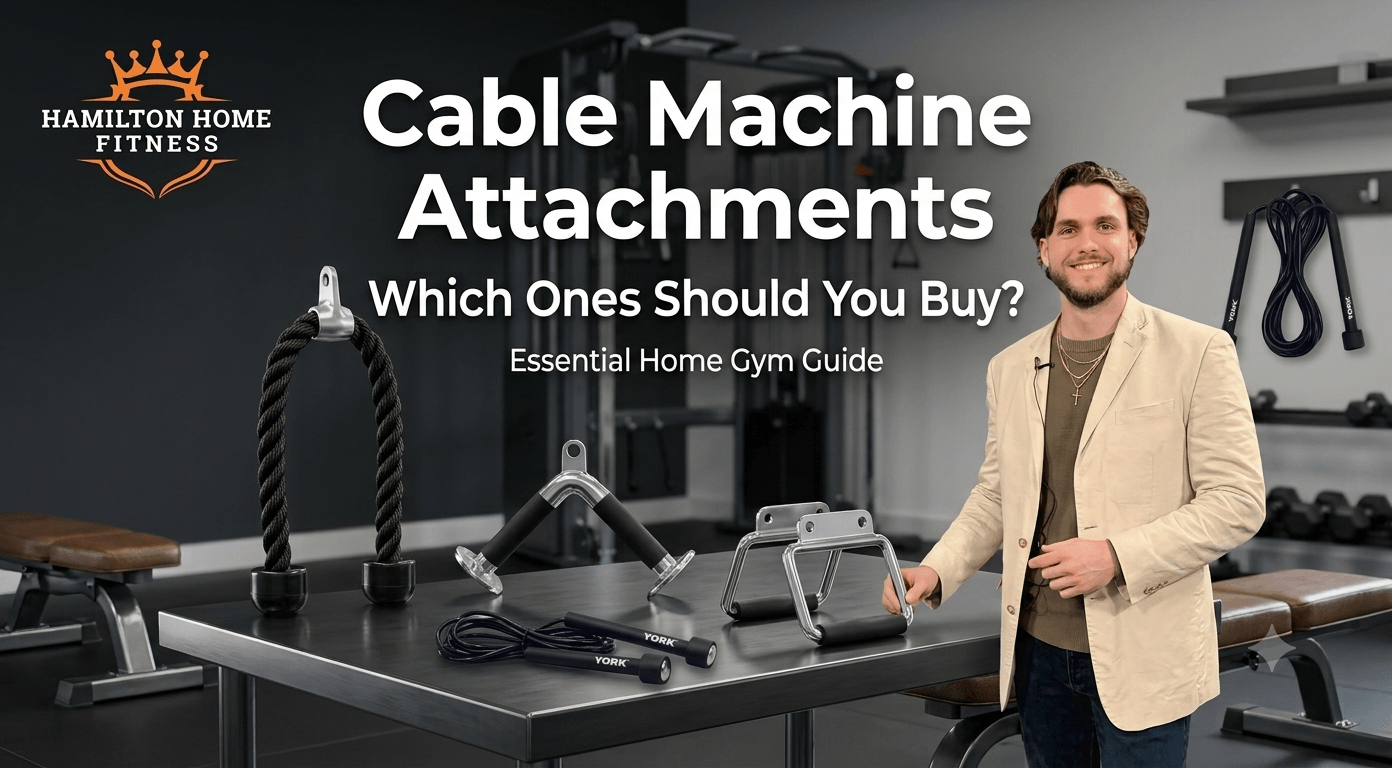
A tricep rope lets each hand move independently, while a rigid triceps bar keeps both hands on one fixed implement. That freedom makes the rope useful for pressdowns, face pulls, rope hammer curls, and overhead triceps extensions.
The rubber stoppers at each end help prevent the hands from slipping off during a repetition. A rigid triceps bar provides a more stable hand position, which some lifters prefer when using heavier resistance or following a consistent movement path.
Neither attachment completely isolates one part of the triceps. Shoulder position, elbow control, range of motion, and exercise technique also affect how the movement feels.
The Hudson Tricep Rope is worth considering for users who want one attachment that supports both arm exercises and face-pull variations.
Lat Bars and Row Handles
Lat bars create wider two-handed pulling options, while seated row handles bring the hands closer and usually keep the wrists in a neutral position.
A wide-grip lat bar works well for pulldowns, kneeling pulldowns, and some straight-arm pulling movements. A double-D handle or parallel-grip row handle suits seated rows and close-grip pulldowns where the elbows travel nearer the torso.
Product names can be confusing. A V-shaped handle designed for rows is different from a smaller angled V-bar made for triceps pressdowns. Check the grip layout and attachment shape instead of relying only on the product name.
D-Handles and Ankle Straps
A pair of single D-handles covers cable flyes, presses, curls, lateral raises, and single-arm rows. Because each handle moves separately, they also work well for unilateral training, where one side of the body performs the exercise at a time.
An ankle strap moves the cable connection to the lower leg. It is mainly useful for glute kickbacks, standing hip abduction, and selected hamstring movements.
For many home gyms, D-handles are essential. An ankle strap is more goal-specific and can wait unless lower-body cable isolation is already part of the training plan.
Straight and EZ Curl Bars
A straight bar provides a simple, symmetrical grip for cable curls, pressdowns, rows, and straight-arm pulldowns. Depending on the exercise, the palms may face down in a pronated grip or face up in a supinated grip.
An EZ curl cable bar uses angled hand positions. This creates a semi-supinated grip, meaning the palms sit between fully upward and fully neutral.
Some users find the angled position more comfortable during curls or pressdowns. Others prefer the direct feel of a straight bar. A beginner usually needs only one of the two, so wrist comfort and exercise preference should guide the choice.
How Does Grip Change the Exercise?
Grip width, wrist position, and attachment movement can change how an exercise feels and how easily you control it. However, no attachment guarantees complete isolation of one muscle or makes an exercise universally better.
Rope vs Straight Bar
Choose a rope when you want independent wrist movement and more freedom at the end of a repetition. Choose a straight bar when you prefer a stable, repeatable grip.
During a triceps pressdown, a rope allows the hands to separate slightly near the bottom. A straight bar keeps both hands fixed in a pronated, or palms-down, position throughout the movement.
The TAG Fitness Triceps Extension Bar with Urethane Grips is a rigid option for users who prefer a consistent two-handed grip.
V-Bar vs Pulldown Bar
A close-grip V-handle suits compact neutral-grip pulls, while a lat pulldown bar provides wider hand positions and more grip-width options.
The V-handle is useful for seated rows and close-grip pulldowns where the elbows stay near the torso. A wider lat bar works better when the exercise requires more space between the hands.
Neither attachment automatically creates “back thickness” or “lat width.” Exercise technique, elbow path, training volume, and range of motion also influence the result.
Fixed vs Revolving Handles
A revolving attachment can rotate relative to the cable. A fixed attachment keeps its connection and grip position more constrained.
Rotation may help the wrists adjust naturally during curls, rows, and pressdowns. A fixed attachment may feel more stable and is often sufficient for exercises with a predictable movement path.
A revolving handle is worth considering when wrist comfort and movement freedom matter. It should not be treated as a guaranteed way to prevent pain or injury.
Will It Fit Your Cable Machine?
Many cable machine attachments use a standard eyelet-and-carabiner connection, but fit is not guaranteed. Carabiner size, eyelet diameter, cable-end design, and proprietary connectors can vary between functional trainers, multi-gyms, and Smith machine cable systems.
Check the Hook and Eyelet
First, compare the machine’s carabiner or snap hook with the attachment eyelet—the metal opening used to connect the attachment.
Before buying, check that:
- The carabiner passes fully through the eyelet.
- The gate can close without obstruction.
- The connector does not sit at an awkward angle.
- Both parts are suitable for the intended load.
- The attachment hangs freely without rubbing the cable.
When the connector type or machine model is unclear, confirm cable attachment compatibility before ordering.
Test Clearance and Cable Travel
A connector may fit while the attachment still limits cable travel or range of motion.
A long rope can touch the floor when connected to a low pulley. A wide lat bar may strike the frame or pulley housing on a compact machine. Check the attachment’s length, width, and movement path before adding significant resistance.
Perform the first few repetitions with light weight. Make sure the attachment moves freely and does not contact the frame, pulley, cable, or your body unexpectedly.
Watch for Proprietary Connectors
Some all-in-one trainers and multi-gyms use pins, ball stops, threaded ends, dual connectors, or enclosed fittings instead of a standard snap hook.
These machines may require an approved adapter or a brand-specific attachment. Do not force an incompatible connector or modify the cable end without guidance from the machine manufacturer or equipment dealer.
Pulley ratio is a separate issue. It affects cable travel and felt resistance, not whether an attachment physically connects.
Which Materials and Features Matter?
Grip material affects comfort, cleaning, and long-term wear, but it does not determine quality by itself. Weld strength, eyelet construction, rotation smoothness, grip bonding, stitching, and hardware condition matter just as much.
Urethane, Rubber, or Chrome
Urethane and rubber add a coated gripping surface, while chrome may be smooth or knurled for extra texture.
Urethane grips are generally easy to wipe clean and may resist surface wear well, making them useful in busy home gyms and training studios. Rubber often feels softer and more secure in the hand, but lower-quality rubber may develop odor, harden, or wear over time.
Chrome attachments are durable and simple to clean. Smooth chrome can feel slippery when hands are sweaty, while knurling—the textured pattern cut into metal—provides a firmer grip. Aggressive knurling may feel uncomfortable during high-repetition exercises.
Judge the Whole Attachment
A comfortable grip cannot compensate for a rough swivel, weak stitching, a narrow eyelet, or loose hardware.
Before buying, inspect:
- Welds and connection points
- Eyelet thickness and opening size
- Swivel or revolving action
- Rope stoppers and end caps
- Strap stitching and padding
- Grip bonding and surface wear
Budget attachments can work well when these details are sound. Premium pricing is more worthwhile when it brings smoother movement, stronger construction, or better durability—not just a polished finish.
Readers building a broader setup can also compare broader fitness accessories after choosing the cable attachments they genuinely need.
FAQ
What Is the Most Versatile Cable Attachment?
A pair of single D-handles usually provides the widest exercise range. You can use them for unilateral rows, presses, cable flyes, curls, lateral raises, and many two-handle movements.
For someone buying only one attachment, a tricep rope is another versatile option because it supports pressdowns, face pulls, hammer curls, and overhead extensions.
How Do You Attach a Handle Safely?
Lower the selected weight before changing attachments. Open the cable’s carabiner, pass it fully through the attachment eyelet, and make sure the gate closes completely.
Perform one or two light test repetitions before adding more resistance. Do not use the attachment if the connector cannot close, sits at an awkward angle, or rubs against the cable or frame.
Does an Attachment Change Pulley Ratio?
No. Pulley ratio is determined by the machine’s cable and pulley arrangement.
The attachment changes your grip, wrist position, and movement setup. It does not change the machine’s mechanical ratio, although a long attachment may reduce the usable cable travel for certain exercises.
How Should Cable Attachments Be Stored?
Hang ropes, cuffs, and handles so they remain dry and off the floor. Store long bars on secure wall hooks or a dedicated cable attachment rack.
Keep attachments organized by type and avoid leaving them connected if they place continuous sideways pressure on the cable. This also makes damaged stitching, loose hardware, and worn grips easier to notice.
How Should Cable Attachments Be Cleaned?
Wipe sweat from metal, urethane, and rubber surfaces after use. Let ropes and fabric straps dry fully before storing them.
Inspect swivels, stitching, eyelets, snap hooks, and the machine cable regularly. Stop using any attachment with damaged welds, severe fraying, loose hardware, or a connector that no longer closes securely.
Final Thought
A useful cable setup starts with a few attachments matched to exercises you perform—not the largest bundle available. Before ordering, check the hook, eyelet, clearance, and connector. Choose the first attachment that unlocks a missing movement, or explore home gyms with cable stations if you still need compatible equipment.
Recent Posts